Let’s get one thing clear: being an empath is not a “weakness” in your career and also in the professional world.
It’s a superpower.
But only when you learn how to wield it, without letting it drain you.
If you’re someone who picks up on other people’s energy, overthinks every Slack message, and needs alone time after just one meeting—this is for you.
Because, let’s be real: building a powerful, aligned career as an empath isn’t about playing small to stay safe. It’s about learning how to move smart, so your sensitivity works for you, not against you.
Let us be honest and real with ourselves. And, along with that, let’s also talk strategy.

Know Your Emotional Labor Threshold
Empaths don’t just do the job.
They feel the job.
That’s why you can’t model your career growth after people who thrive on nonstop meetings, chaos, or constant visibility. If you try to climb using their playbook, you’ll burn out by Thursday.
Start by tracking your energy.
Notice what kind of work drains you versus what actually gives you life. Is it constant collaboration that wipes you out? Or is it ambiguity, last-minute changes, or managing other people’s moods?
Your career strategy begins by designing your goals around your nervous system, not in spite of it. This is what sustainable success looks like for you.
Build Influence Quietly, Not Loudly
You don’t need to be the loudest in the room to be respected.
Empaths are naturally tuned into what other people need. Use that. Anticipate what your boss, client, or team is struggling with—then proactively solve it.
Not with drama. Not with overexplaining. Just a well-placed suggestion, solution, or resource. That’s how you build strategic capital.
Your impact doesn’t need to be noisy. It needs to be felt.
And when you do that consistently, people start to trust you—not just for your kindness, but for your clarity and foresight.
Don’t chase attention. Build quiet influence. It lasts longer.

Stop Over-explaining Yourself
Empaths often feel like they have to justify every decision.
Every email. Every request. Every pause.
Let me say this with love: You don’t owe anyone a PowerPoint presentation on your boundaries. Practice saying things like:
“That time won’t work. I’m available earlier/ later.”
“I’d like more time to think on this before giving feedback.”
“I don’t have the bandwidth for that right now.”
Direct. Respectful. No essay required. The more you explain, the more people assume you need permission. You don’t. Say what you mean. Hold the line. Move on.
Align Your Career Moves With Your Values, Not Just Your Emotions
Here’s where a lot of empaths get stuck: You feel everything. So it’s easy to make big decisions based on a temporary emotional wave.
“I can’t stand this job anymore—I need to quit.”
“This manager makes me anxious—I need to pivot.”
“I’m so drained—I must be on the wrong path.”
Pause. Feelings are valid, but they aren’t always direction. Instead of reacting to emotion, anchor yourself in values. What matters to you long-term? Autonomy? Creativity? Impact? Stability?
Now ask: does this next move bring me closer to that? If yes—go. If no—wait.
Empowered careers are built on aligned values, not emotional reactions.


Use Boundaries as a Strategy, Not Just a Survival Mechanism
You don’t set boundaries because you’re fragile. You set them because you’re powerful. When you protect your energy, your focus sharpens. When you say no to distractions, your reputation grows. When you honor your limits, you model what leadership really looks like.
Start with micro-boundaries:
No checking emails after 7 PM
15 minutes of silence before your first meeting
Blocking “deep work” hours on your calendar
Then work your way up to the bigger ones:
Advocating for flexible hours
Saying no to projects that drain your soul
Walking away from toxic bosses or performative culture
These aren’t indulgences. They’re strategy.
Let Your Empathy Guide Your Brand, Not Control It
Empaths are naturally reflective. Observant. Deep.
This can create a powerful personal brand—if you use it with intention. Ask yourself:
What do people always come to me for?
What part of my work brings me joy and results?
What’s the thread that connects all my best career moments?
That’s your brand. Then, start expressing that value clearly and confidently.
Update your resume and LinkedIn to reflect your strengths, not your sensitivity. Frame your empathy as insight. As emotional intelligence. As leadership. Because let’s be honest, people don’t want just another robot. They want someone who sees the full picture. Someone who leads with empathy, but backs it up with results.
Someone with exceptionally high Emotional Quotient (EQ). That’s you. Own it.

Find Your Power People
This is non-negotiable. You need at least one person in your corner who gets it. Someone who won’t tell you to “toughen up.” Someone who values your sensitivity instead of dismissing it. Someone who helps you strategize when your energy dips or your vision blurs.
That might be a mentor, a therapist, a coach, or a trusted colleague.
But don’t try to do this alone. Even warriors need support.
Especially the quiet ones.
And Finally…
Here’s what I know: Empaths weren’t made for conformity. You weren’t built to numb out, hustle hard, and call that success.
You were built to lead differently. To build careers rooted in vision, not just metrics. To move with heart and strategy. So stop playing small to protect yourself from burnout. I also created a 49 page FREE Career Clarity Blueprint: 5 Days to Promotions, Pay Raises & Career Shifts – grab this (for free!) if you’re looking for some premium level strategies from someone who knows what they’re talking about.
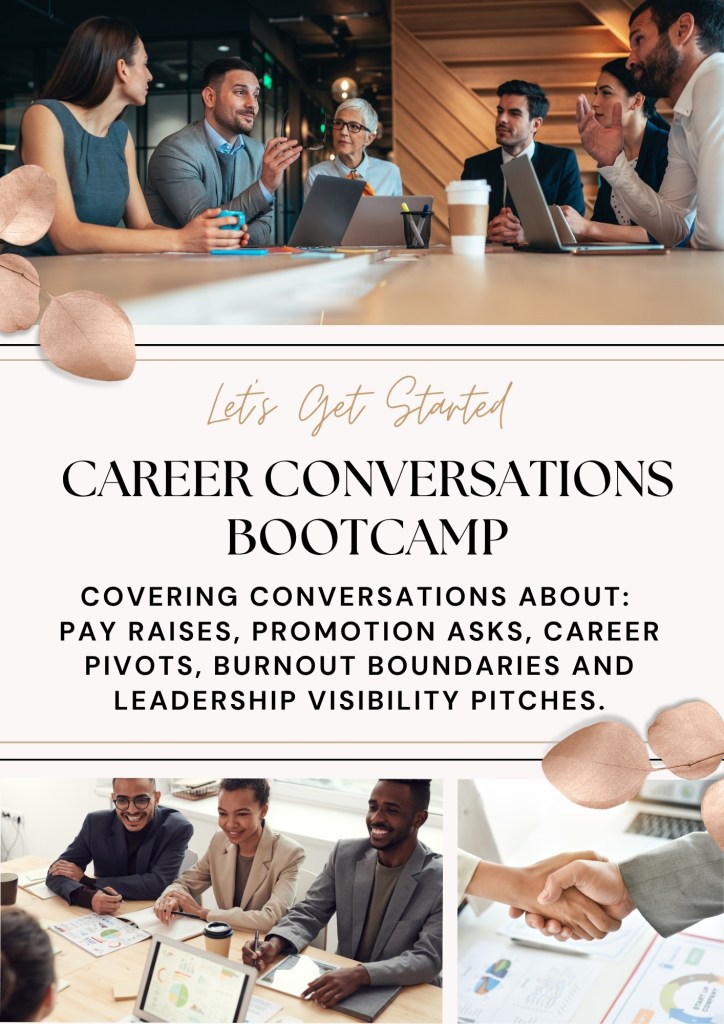
Learn how to move smarter. Sharper and louder when needed, quiet when it counts. You don’t need to sacrifice your sensitivity to succeed. You just need a better strategy for it. If you are looking for conversation tips, tricks and actual scripts to help you succeed at work, The Career Conversations Bootcamp will be your new best friend. This amazing guide is packed with strategies that give you tangible results, helping you with promotion asks, pay raise chats, career pivot conversations, networking guides, setting burnout boundaries at work and helping with leadership visibility pitches. Also contains follow up guides and templates, so that it gets more difficult for anyone to “ghost” you.
Everyone needs a professional friend in their corner who helps them out with real-talk, deep insight and mentor-level strategy. And now? You have got one. Book a Free Career Clarity Call with me if you’d like some quick insight on how to improve and succeed in your career!


 Spirit and Strategy Career Coaching
Leave a comment